Tuesday, May 13, 2014

Astronomer Biography Sources

Epps, H. "George O. Abell, Astronomy: Los Angeles." University of California: In Memoriam, 1985.     California Digital Library, n.d. Web. <http://content.cdlib.org/view?docId=hb4d5nb20m&doc.view=content&chunk.id=div00002&toc.depth=1&brand=calisphere&anchor.i=0>.

"George O. Abell - Astronomer, Educator, Sceptic." Space Theology (Astrotheology). N.p., 8 Oct. 2012. Web. <http://spacetheology.blogspot.com/2012/10/george-o-abell-astronomer-educator.html>.

Friday, May 9, 2014

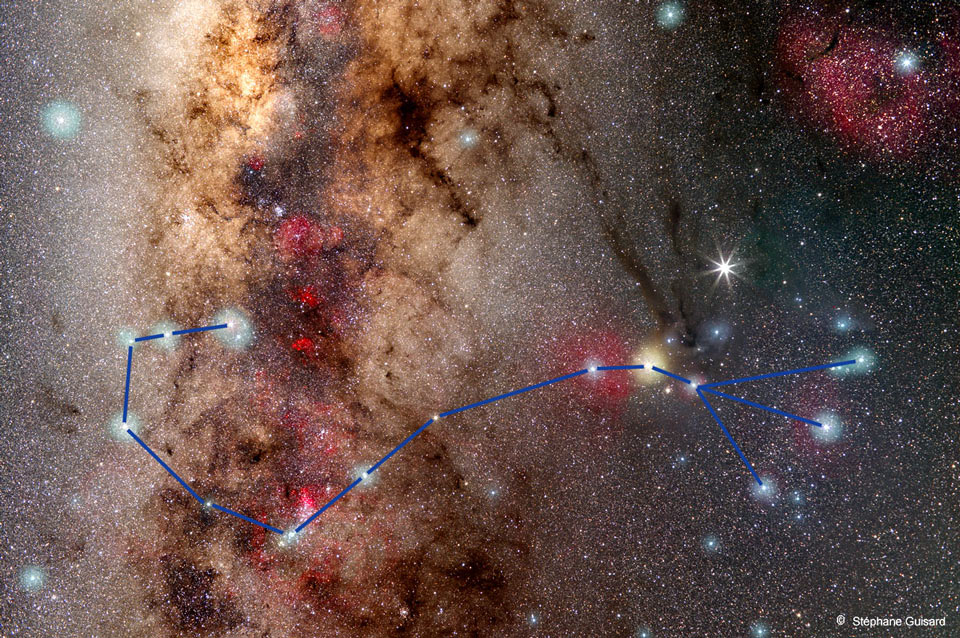
APOD 4.7

The image below features a summer zodiacal constellation: Scorpius. This image was taken with a specialized camera using optical filters and later processed with a digital image processor. The high detail in the photograph was achieved with a series of long exposures taken in several colors but only one exposure in a specific hue of red that signifies hydrogen. Part of the plane of the Milky Way is visible across the left side of the image. The dark dust bands in the center of the image are known as Dark River. The Dark River connects the Pipe Nebula to the colorful region near Antares. The Dark River is located about 500 light years away and spans nearly 10 degrees across the sky in the constellation of Scorpius. 


Friday, May 2, 2014

APOD 4.6

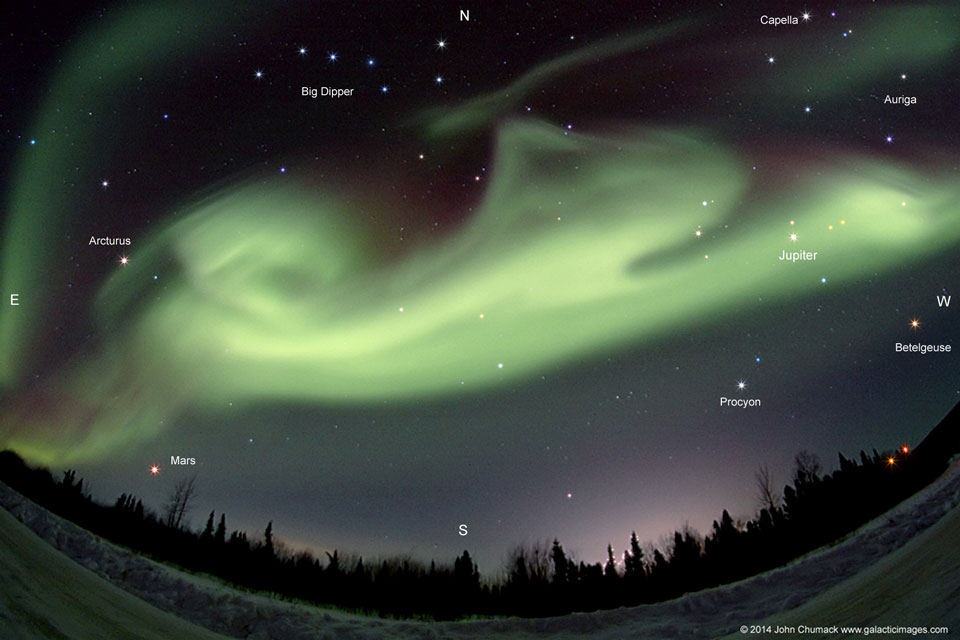
Astrophotographer John Chumack captured an amazing and unusual photograph of an aurora. This photograph was taken near Fairbanks, Alaska during his annual aurora tour. The aurora's shape stands out the most as it looks like a leaping dog complete with ears, a head, and even a curly tail. Using a wide-angle lens coupled with 15 seconds of exposure he captured not only this unique aurora, but also various highlights of the night sky. Jupiter can be seen through the dog's front legs and Mars can be seen between the dog's hind legs.Other notable features include the Big Dipper, Betelgeuse, Arcturus, and Capella. 


Friday, April 25, 2014

APOD 4.5

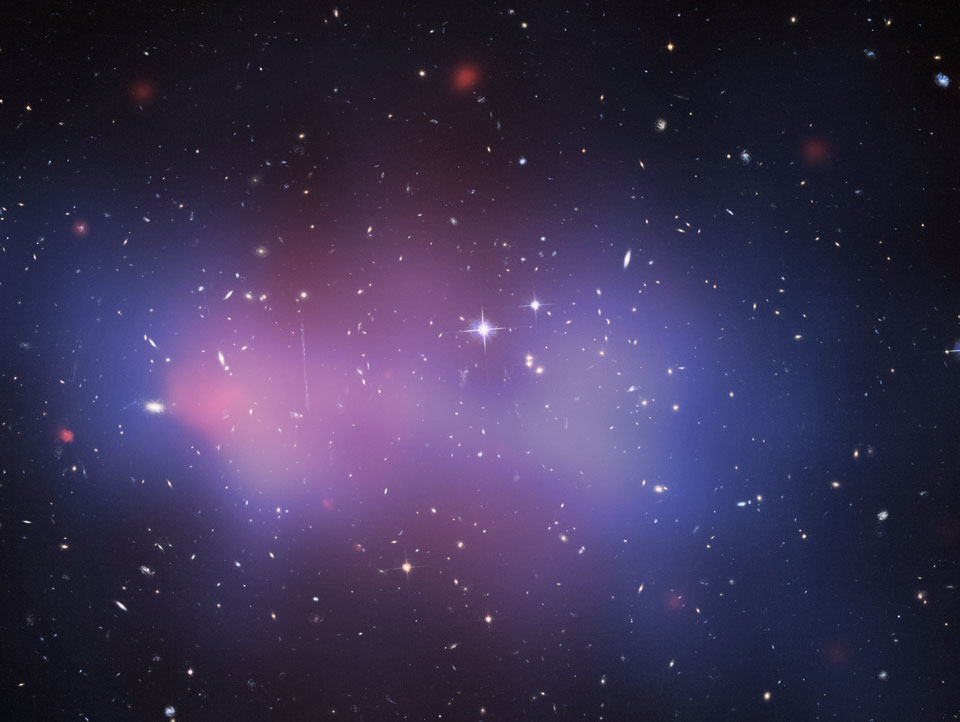
The image below depicts the galaxy cluster, El Gordo (literally translated to The Fat One) aka ACT-CL J0102-4915. This is the largest distant galaxy cluster to ever have been discovered and observed. It is located approximately 7 billion light-years from Earth. It was found by NASA's Chandra X-ray Observatory. This cluster is the most massive (has the mass of a million billion Suns) and hottest and gives off the most X-rays of any known cluster at this distance and beyond. This cluster is  composed of two separate galaxy subclusters that are currently colliding at several million kilometers per hour. The pinkish hue in the image is the hot gas and a computer generated map shows the most probably distribution of dark matter in blue. This distribution was calculated using the gravitational lens distortions of background galaxies. 

Thursday, April 17, 2014

APOD 4.4

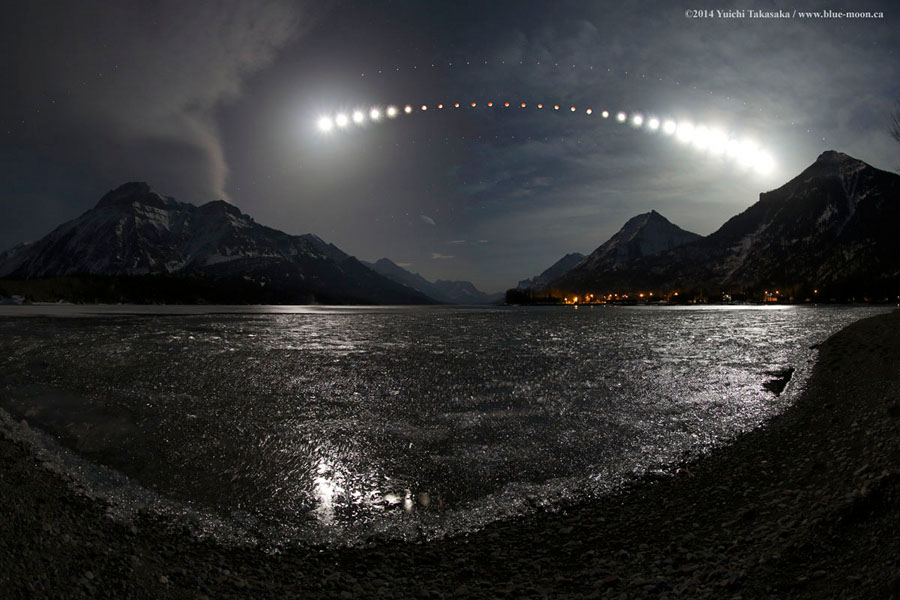
This sequence of images below was taken early Tuesday morning in Waterton Lakes National Park in Alberta, Canada. The peaks in the distance are also part of Glacier National Park, Montana. A series of photographs of the moon shows the progression of a total lunar eclipse- 2014's first. The lunar eclipse was visible for everyone in the Western Hemisphere to enjoy. Each photograph was taken ten minutes apart and captures the entirety of the total phase of the eclipse (which lasted a total of 80 minutes). The image also shows the progression of Spica and Mars across the night sky. Aristarchus, a Greek Astronomer around 270 B.C., was the first to measure the duration of a lunar eclipse (without the aid of modern technology) using simple geometry.

Friday, April 11, 2014

MicroObservatory Trifid Nebula

Processed using "LOG". The first image is a normal combination of the color enhanced images with the red, blue, and green filters.

APOD 4.3

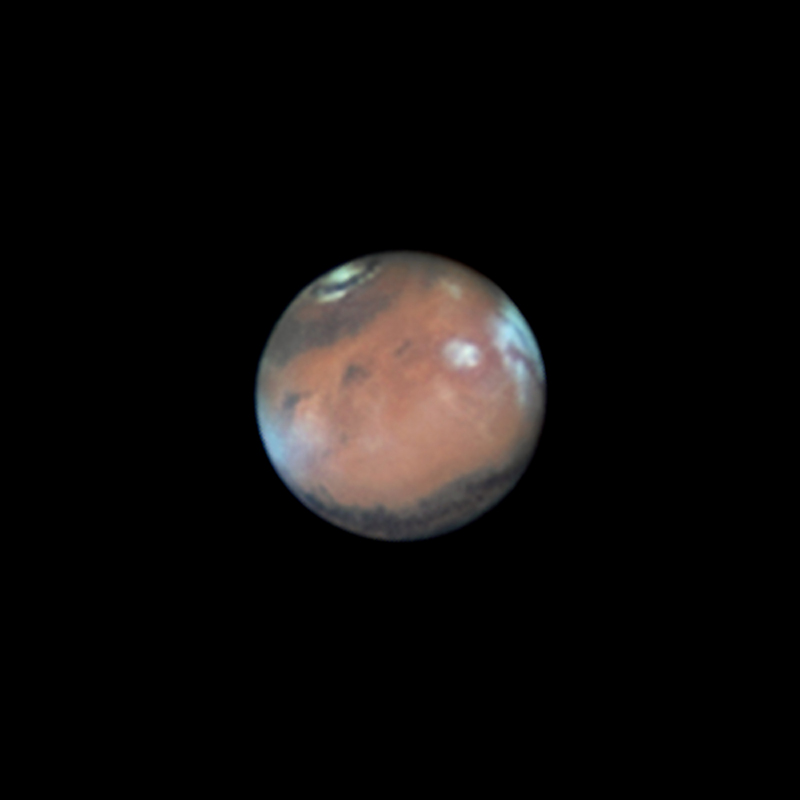
The image below shows Mars before it reaches opposition (which occurs on April 8th) and nearing its closest approach (which occurs on April 14th). This occurs roughly every 26 months. This image was taken using a high-speed digital camera and 16-inch diameter telescope located in Assis, Brazil. Mars is located in the constellation Virgo, opposite the Sun. It is unique in it's reddish color and can be found next to the faint Asteroid Vesta and dwarf planet Ceres. Mars rises in the east at sunset and can be found directly overhead by midnight shining almost 10 times brighter than a first magnitude star. Mars' north polar cap is visible in this image at the top left. The image also reveals whitish orographic clouds (large dense clouds that form over mountainous regions and remain over the tops of mountains; formed when moist air rises and reaches colder upper altitudes causing condensation). The 'mountains' over which these clouds rest is actually the largest volcano in the solar system (three times higher than Everest and fifty times the volume of Earth's largest volcano) named Olympus Mons.